
The Second Instrument
When the space you're performing in becomes part of the performance

People often ask me what my pre-performance routine is.
Are there any specific routines, rituals, pieces, exercises which I utilise and follow to help get myself into the right headspace before a show?
There probably should be but I don’t have a specific way of doing things.
I’ve mentioned previously about the somewhat unique circumstances of being a pianist and turning up to every performance to see what piano awaits you today, and in that context, time with the piano to get to know it and all its foibles and individual nature and qualities is very important.
There are also occasions where the space in which the performance is happening - and where the piano is situated - has such specific characteristics, which have an impact on and fundamentally affect the way in which I might want to play my pieces on that day.
This would most often occur when playing in a larger, more reverberant space such as a church, cathedral or large hall. These spaces tend not to have been acoustically treated like a dedicated concert hall might, and there is usually an abundance of materials such as exposed stone, wood and large windows for sound to bounce around on, with these usually big, open spaces made for acoustic sounds (notably voices) carrying the sound, most notably the decay of a note or chord.
Recently, whilst preparing to perform at St Mary-le-Bow Church in the City of London, I spent a bit of time getting to know this Blüthner grand piano. It’s quite a unique building - unusual for a church, in that it is almost square in shape, but with a very high ceiling. So, rather than the sound feeling far away, it feels quite close, but with a long decay as it literally rushes up into the ether.
Here’s an example…
When I’m trying to ascertain the natural reverberance of a performance space, my piece Paean works really well for this, in that it is chordal, uses a wide range, and is composed in a way which allows for extended space to be taken before moving on to the next chord.
Even in just a few minutes, you’ll see how I become more accustomed to the length of the reverb and its decay. What’s extremely fun is then thinking through how this might affect the way I play the pieces based on the performance context and environment.
There are always so many variables - see the different pianos to play point above - and I really love having the flexibility in this piece which enables me to engage with and interact with the space as an essential part of the performance.
In this way, the sound of the space begins to take on a life of its own…almost becoming a second instrument in the performance.
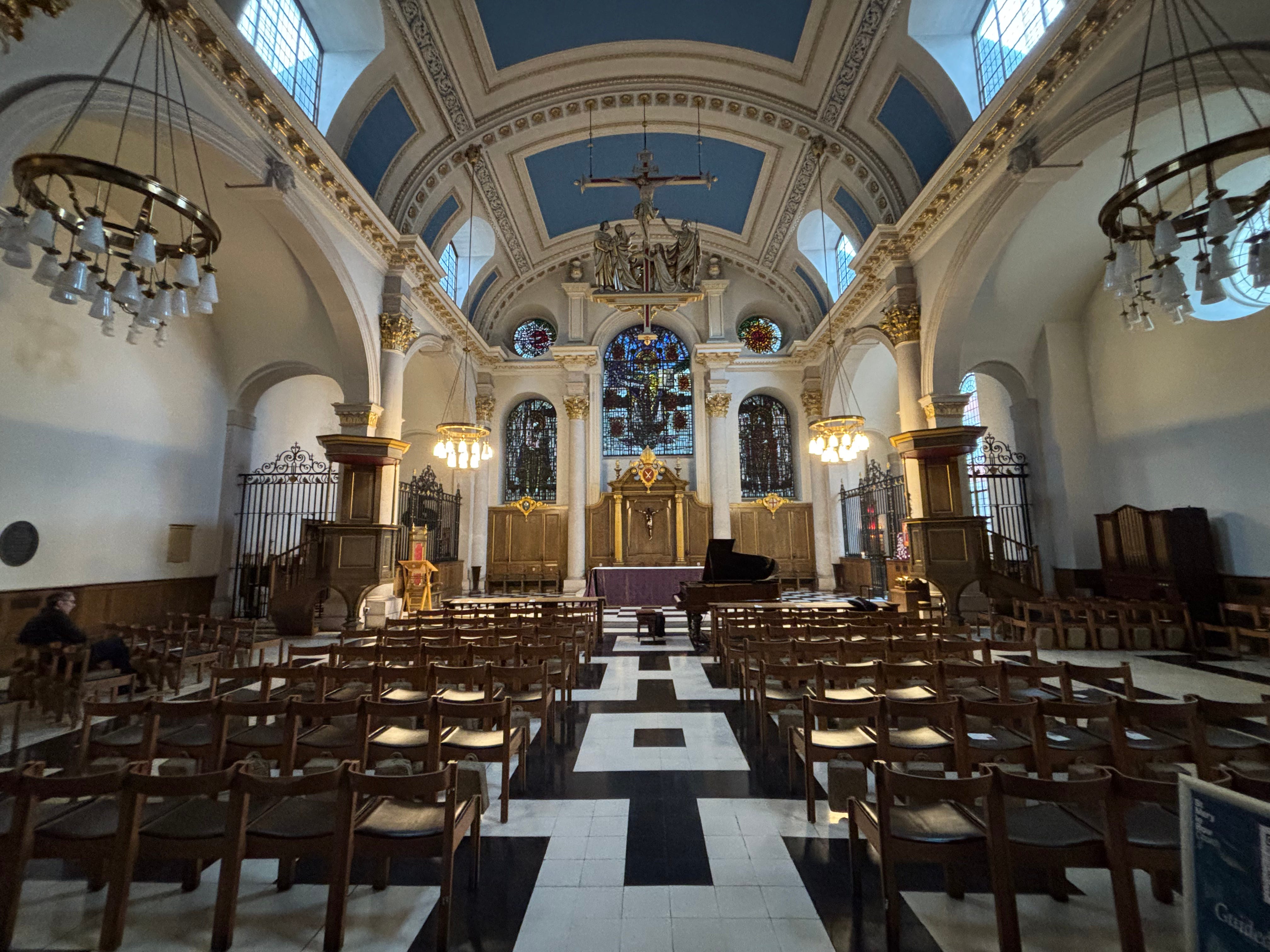
You’ll see and hear that it isn’t simply about moving between chords more slowly (although that is true). The spaciousness between the harmonic movement creates its own tension, whilst thinking about whether to let the sustained sound completely fall away before playing another one.
It also offers some great possibilities around phrasing, using dynamics in creative ways, and even considering how much (or little) of the pedal(s) to use.
By factoring this is in to the very nature of a performance, it instantly helps the audience to know you’re aware of it and that it’s going to be ok!
Rather than seeing it as something to be tamed or needing to endure, I love the way that these large spaces create a distinctly unique sound, to the extent I feel it is almost an instrument in itself.
What do you think?
Is this something you have had to do in the past